Present. Explain. Discover.

Scale models for institutional projects and museums

We transform buildings, territories, events, processes and complex ideas into physical and interactive experiences that are easy to understand. We design scale models for museums, interpretation centres, exhibitions, public authorities and educational spaces, adapting each project to the content, the visitor journey and the people who will experience it.

Scale model, interactivity, software, audiovisual content and exhibition furniture developed by a single team.

Request a quote now

Tell us about your project and we will bring it to life. We will reply within 24 hours, with no obligation.

    Request a quote now

    Tell us about your project and we will bring it to life. We will reply within 24 hours, with no obligation.

      Making sense of what cannot be seen at a glance

      An experience that turns information into knowledge

      A scale model makes it possible to view a building, city, infrastructure or event from a perspective that would be impossible in reality.

      It helps visitors to orient themselves, understand the relationships between elements and discover information that might be difficult to interpret through separate plans, texts or images.

      When combined with lighting, software and audiovisual content, the scale model can also tell a story and guide visitors through different levels of information.

      Maquetas para proyectos institucionales y museos (1)

      Orientates

      Provides an overview of the territory, building or complex represented.

      Explains

      Makes visible the relationships, transformations, routes and processes that are difficult to communicate using other formats.

      Guides

      Organises information and directs attention towards the relevant elements at each stage.

      Invites discovery

      Allows visitors to explore the content visually, physically and interactively.

      A tool for different forms of public engagement

      Where can it be used?

      Cultural and sporting venues

      Scale models of stadiums, venues, facilities and places associated with culture, sport and collective memory.

      Institutions and public authorities

      Tools for presenting public projects, urban plans, new facilities, regional initiatives and changes to the city.

      Presentations and public participation

      Representations that make it easier to explain projects to residents, associations, technical teams and other stakeholders.

      Interpretation centres

      Representations that help visitors understand a place, landscape, infrastructure or process before visiting or exploring it in depth.

      Touring exhibitions

      Modular, portable solutions designed for presentation in different venues, cities or at different events.

      Visitor centres

      Experiences designed to explain an organisation's activities, history, facilities or future projects.

      Museums and exhibitions

      Scale models designed for permanent or temporary exhibitions, helping visitors to interpret architecture, heritage, science, technology, territories or historical events.

      From observer to participant

      Interaction to explore the content

      Interactivity allows visitors to make decisions, activate content and establish connections between the scale model and the accompanying information.

      Zoned lighting

      Identifies buildings, stages, routes, themed areas or points of interest.

      Lighting sequences

      They can explain transformations, historical events, technical processes or routes through the territory.

      Synchronised operation

      A selection made on a screen can illuminate an area of the scale model and simultaneously display related content.

      Button panels

      They provide simple, immediate interaction to activate areas or start sequences.

      Mechanisms

      We can incorporate openings, lifting elements, moving parts or changes in position where they help to explain the content.

      Audiovisual content

      Images, animations and videos expand on what cannot be physically represented in the scale model.

      Touchscreens

      Visitors can select elements and view images, texts, plans, videos, reconstructions and other content.

      Interaction should not distract from the content. It should help visitors understand it.

      One team

      From physical representation to digital content

      Our team brings together scale-model making, architecture, design, electronics, software and visual content production.

      This combination allows us to develop every element of the experience in a coordinated way.

      Physical scale model

      The main representation around which the experience is organised.

      Electronics and lighting

      Systems for highlighting elements, creating sequences and connecting the scale model to other content.

      Bespoke software

      Applications for exploring information, controlling the experience and adapting navigation to the project.

      3D infographics and animation

      Content to reconstruct spaces, show different periods or explain aspects that cannot be represented physically.

      360º virtual tour

      Digital tours for exploring interiors, inaccessible spaces or different stages of a project.

      Furniture and hardware

      Tables, plinths, lecterns, screens and equipment integrated into the exhibition design.

      Transport and installation

      Coordination of transport, assembly, connection and commissioning at the final venue.

      Model, interaction, content and space coordinated through a single point of contact.

      Institutional and museum projects

      Solutions created to explain real projects
      Arroyofresno Stormwater Tank – Canal de Isabel II

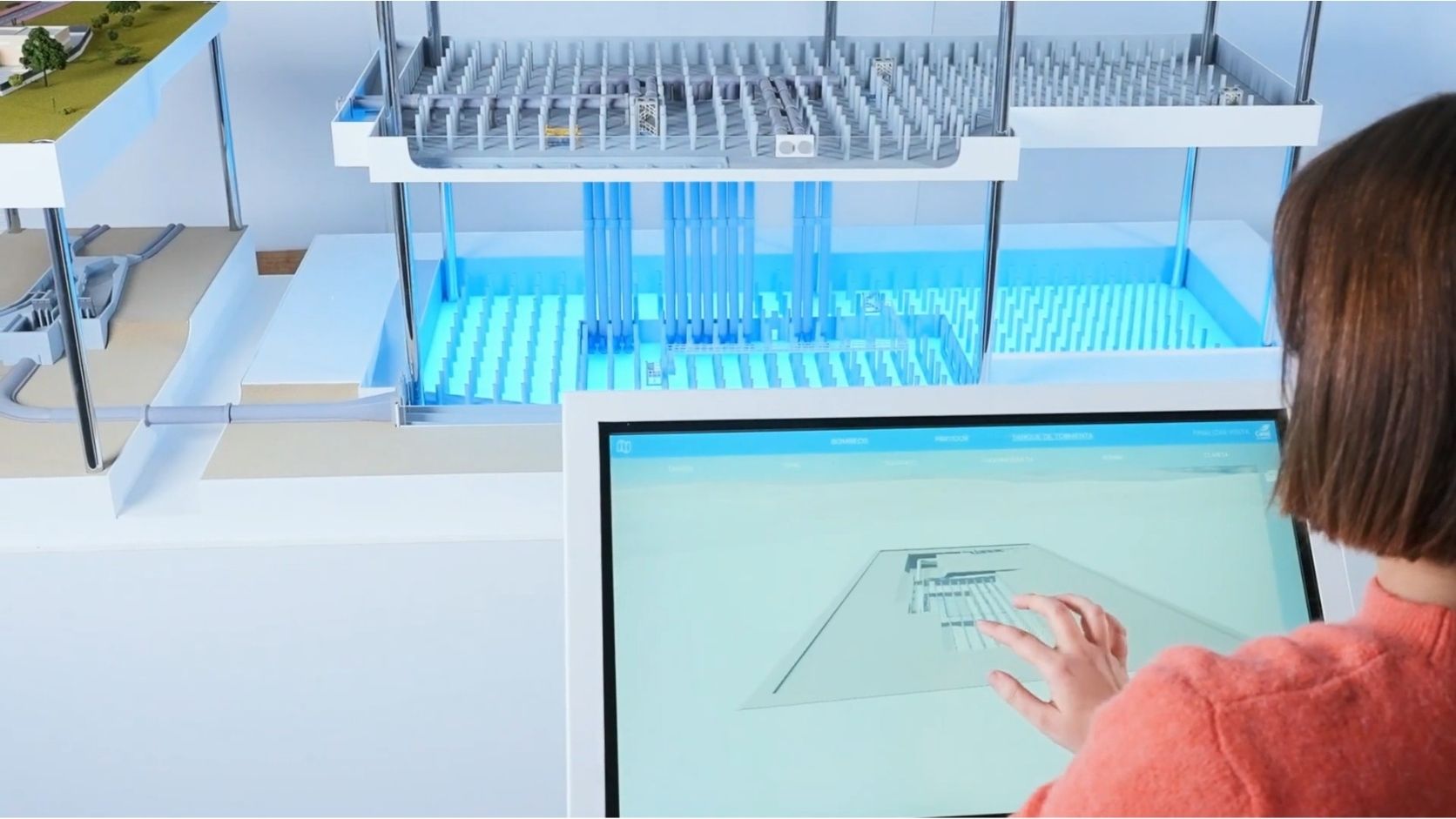
      A physical scale model connected to a 3D model and a 43-inch touchscreen lectern makes it possible to understand the different parts and stages of an infrastructure system that normally..

      Gregorio Marañón Hospital – Community of Madrid

      A 1:250 scale model combines 3D printing, acrylic, PVC and lighting to communicate a hospital project that is still at an early stage with precision...

      City of Justice — Community of Madrid

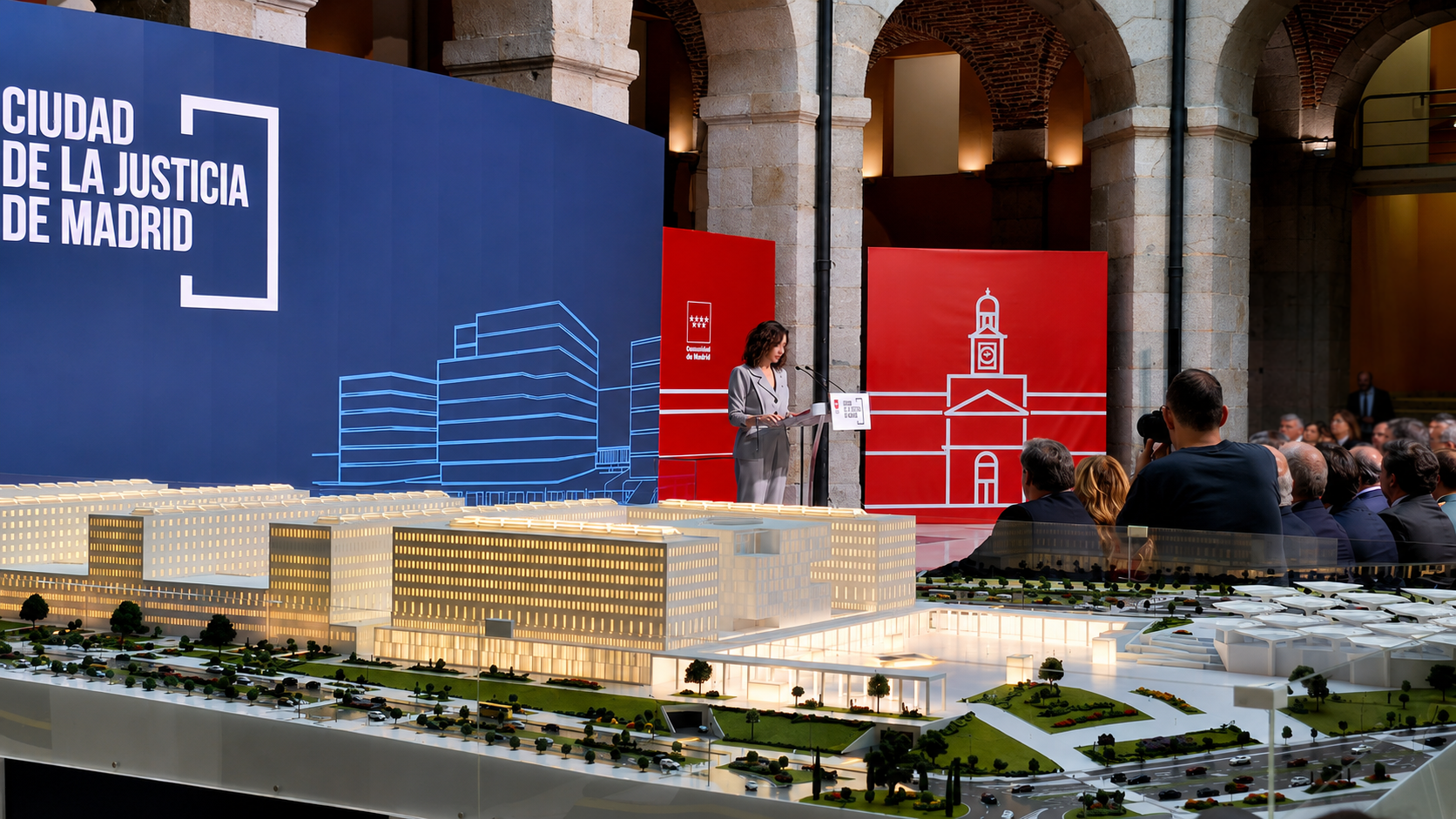
      We transformed a large-scale public project into an experience that can be explored and touched: an interactive conceptual scale model of more than 16 m², with a touchscreen lectern, 3D..
      Frequently asked questions

      We answer your questions

      What types of models can be used in a museum?

      We can create architectural, urban, territorial, historical, heritage, scientific, industrial and technical models.

      We can also develop sectional models, reconstructions of different periods and interactive models.

      Yes. We can integrate zoned lighting, sequences, button panels, touchscreens, applications, mechanisms and audiovisual content.

      The interaction is designed according to the content and the type of audience that will use the installation.

      Yes. We can produce infographics, 3D animations, videos, virtual tours and interactive applications.

      This content can be synchronised with the model or used independently in other parts of the exhibition.

      Yes. We can store the software and content on the equipment itself so that the main functions work offline.

      This enables the experience to remain operational without relying on the venue’s internet connection.

      Yes. We can integrate into a team comprising museum designers, architects, designers, agencies, construction companies and audiovisual integrators.

      We coordinate dimensions, materials, connections, furniture and installation requirements with those responsible for the project.

      We work from the documentation provided and establish validation stages with the specialists responsible for the content.

      The documentation may include plans, 3D models, photographs, historical studies, maps, reconstructions, technical data sheets and visual references.

      We organise the information into different levels of interpretation and design clear, straightforward interaction.

      We also consider the height, visibility, reach of the controls and the accessibility requirements established for the project.

      We need to know the purpose of the experience, the audience, the available space and the content that needs to be explained.

      Plans, 3D models, photographs, maps, texts, videos, historical or technical documentation and the museum design project, if one already exists, are also useful.

      The timeframe depends on the dimensions, level of detail, preliminary research, validations, interactivity and digital content.

      After reviewing the documentation, we prepare a schedule covering the design, review, production, integration, testing and installation stages.

      The cost depends on the size, scale, materials, level of detail and complexity of production.

      Other factors include the research and modelling required, lighting, software, mechanisms, audiovisual elements, furniture, transport and installation.

      We assess each project to propose a solution tailored to its objectives and the exhibition space.

      Tell us what visitors should discover

      We turn content into a physical and interactive experience

      Tell us what you want to represent, who will visit the space and what information they need to understand.

      Our team will review the documentation and propose a solution that connects the model, interactivity, content and exhibition design.

      No obligation · response within 24 hours

      If the experience has not yet been defined, we can help you organise the content and plan the solution from the outset.